Advanced Trauma Life Support (ATLS)
Categories: Health and Medical Courses Diploma
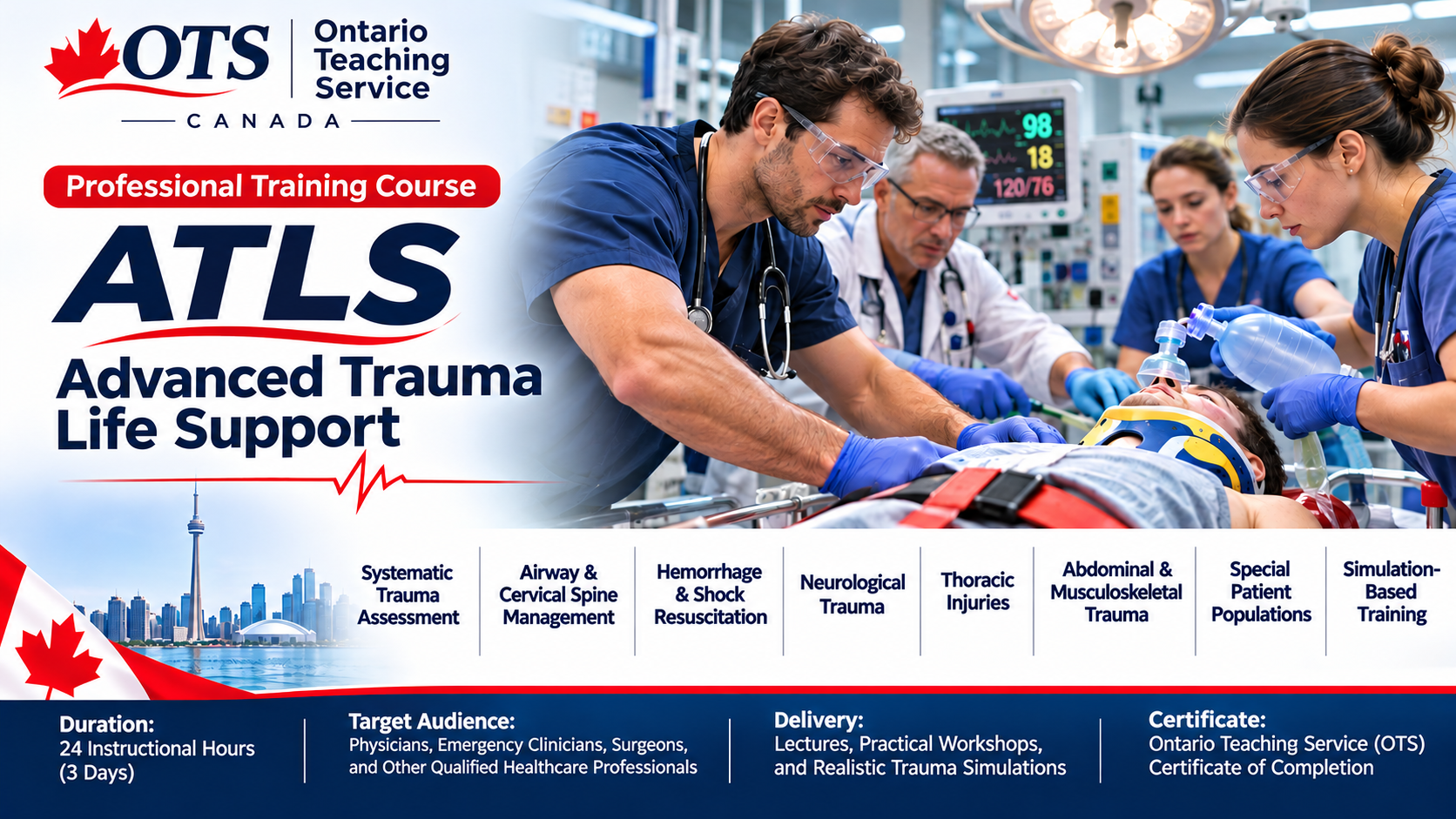
About Course
- Comprehensive Professional Development: An intensive, evidence-informed training program designed to enhance healthcare professionals’ clinical knowledge, critical decision-making, and practical competencies in trauma assessment, resuscitation, and emergency management.
- Effective Emergency Response: Develops the ability to respond rapidly, systematically, and effectively to life-threatening traumatic injuries through timely interventions and evidence-informed clinical practices.
- Competency-Based Education: Delivered by Canadian OTS, the program integrates theoretical knowledge with practical clinical applications, emphasizing systematic patient assessment, injury prioritization, and emergency stabilization.
- Comprehensive Trauma Management: Covers essential clinical areas, including airway and cervical spine management, thoracic trauma, hemorrhage and shock, neurological injuries, abdominal and musculoskeletal trauma, and special patient populations.
- Simulation-Based Learning: Incorporates interactive lectures, clinical case studies, supervised practical workshops, and realistic trauma simulations to strengthen clinical reasoning and hands-on competencies.
- Clinical Decision-Making and Leadership: Enhances critical thinking, clinical prioritization, effective communication, multidisciplinary teamwork, and leadership in high-pressure emergency environments.
- Patient Safety and Quality Care: Promotes interdisciplinary collaboration, professional accountability, evidence-informed interventions, and continuous improvement in trauma care delivery.
- Professional Competency Development: Equips participants with the knowledge and practical skills to conduct systematic trauma assessments, recognize critical injuries, establish treatment priorities, and contribute effectively to coordinated trauma resuscitation and emergency care within their professional scope of practice.
What Will You Learn?
- Systematic Trauma Assessment: Apply structured primary and secondary surveys to rapidly identify and prioritize life-threatening injuries.
- Airway and Cervical Spine Management: Assess airway emergencies, support oxygenation and ventilation, and apply cervical spine protection principles.
- Thoracic Trauma Management: Recognize critical chest injuries and determine appropriate emergency management priorities.
- Hemorrhage and Shock Management: Identify traumatic bleeding, assess circulatory instability, and apply evidence-informed resuscitation principles.
- Neurological Trauma Assessment: Evaluate traumatic brain and spinal injuries using neurological assessment tools, including the Glasgow Coma Scale.
- Abdominal and Musculoskeletal Trauma: Recognize abdominal, pelvic, vascular, and orthopedic injuries and establish appropriate stabilization priorities.
- Special Trauma Populations: Adapt trauma assessment and management principles for pediatric, geriatric, pregnant, and burn patients.
- Emergency Clinical Decision-Making: Prioritize time-critical interventions, recognize clinical deterioration, and determine referral and transfer requirements.
- Trauma Teamwork and Leadership: Strengthen interdisciplinary communication, clinical coordination, and leadership during trauma emergencies.
- Simulation-Based Clinical Competencies: Integrate theoretical knowledge with practical skills through realistic trauma simulations, case studies, and structured assessments.
Course Content
Module 1: Introduction to Trauma Care
-
Trauma care principles
-
Global trauma epidemiology
-
Trauma-related morbidity and mortality
-
Mechanisms of injury
-
Blunt trauma
-
Penetrating trauma
-
Polytrauma
-
Trauma systems and networks
-
Prehospital trauma management
-
Emergency department preparedness
-
Trauma team activation
-
Trauma team composition
-
Trauma team leadership
-
Multidisciplinary collaboration
-
Trauma triage and prioritization
-
Patient safety
-
Clinical decision-making
-
Golden hour concept and limitations
-
Early intervention
-
Trauma documentation
-
Professional and ethical responsibilities
Module 2: Initial Assessment and Primary Survey
-
Initial trauma assessment
-
Systematic patient evaluation
-
XABCDE assessment framework
-
Catastrophic external hemorrhage control
-
Airway assessment
-
Cervical spine protection
-
Breathing assessment
-
Circulatory assessment
-
Neurological disability assessment
-
Exposure and environmental control
-
Life-threatening injury identification
-
Primary survey priorities
-
Simultaneous resuscitation
-
Vital signs monitoring
-
Hemodynamic instability
-
Level of consciousness
-
Glasgow Coma Scale (GCS)
-
Pupillary assessment
-
Oxygen saturation monitoring
-
Temperature management
-
Continuous patient reassessment
-
Clinical deterioration recognition
-
Emergency stabilization
-
Trauma resuscitation algorithms
-
Primary survey simulation
Module 3: Airway and Cervical Spine Management
-
Airway anatomy and physiology
-
Airway assessment
-
Airway obstruction
-
Airway patency
-
Airway protection
-
Oxygenation
-
Ventilation
-
Basic airway maneuvers
-
Jaw-thrust maneuver
-
Airway suctioning
-
Oropharyngeal airway
-
Nasopharyngeal airway
-
Bag-valve-mask ventilation
-
Supplemental oxygen
-
Advanced airway indications
-
Endotracheal intubation principles
-
Supraglottic airway devices
-
Difficult airway recognition
-
Failed airway management principles
-
Emergency surgical airway awareness
-
Capnography
-
Ventilation monitoring
-
Cervical spine injury recognition
-
Spinal motion restriction
-
Manual in-line stabilization
-
Cervical collar limitations
-
Airway management complications
-
Airway simulation workshop
Module 4: Thoracic Trauma and Breathing Emergencies
-
Thoracic trauma assessment
-
Chest anatomy
-
Respiratory physiology
-
Blunt chest trauma
-
Penetrating chest trauma
-
Respiratory distress
-
Respiratory failure
-
Hypoxemia
-
Tension pneumothorax
-
Open pneumothorax
-
Simple pneumothorax
-
Massive hemothorax
-
Flail chest
-
Pulmonary contusion
-
Rib fractures
-
Sternal fractures
-
Cardiac tamponade
-
Blunt cardiac injury
-
Tracheobronchial injury
-
Traumatic aortic injury
-
Chest inspection
-
Chest palpation
-
Breath sound assessment
-
Pulse oximetry
-
Thoracic ultrasound principles
-
Chest radiography
-
Emergency decompression indications
-
Chest drainage principles
-
Oxygen therapy
-
Respiratory support
-
Thoracic trauma simulation
Module 5: Circulation, Hemorrhage and Shock
-
Circulatory assessment
-
Hemodynamic monitoring
-
Traumatic hemorrhage
-
External bleeding
-
Internal bleeding
-
Hemorrhagic shock
-
Hypovolemic shock
-
Obstructive shock
-
Neurogenic shock
-
Shock recognition
-
Shock classification
-
Tissue perfusion
-
Peripheral circulation
-
Pulse assessment
-
Blood pressure monitoring
-
Capillary refill
-
Lactate monitoring
-
Base deficit
-
Hemorrhage-control priorities
-
Direct pressure
-
Tourniquet application principles
-
Hemostatic dressings
-
Pelvic stabilization
-
Intravenous access
-
Intraosseous access
-
Fluid resuscitation principles
-
Blood-product resuscitation
-
Massive transfusion protocols
-
Balanced transfusion
-
Tranexamic acid indications
-
Trauma-induced coagulopathy
-
Damage-control resuscitation
-
Damage-control surgery principles
-
Hypothermia prevention
-
Hypocalcemia recognition
-
Ongoing hemorrhage reassessment
-
Shock-management simulation
Module 6: Head, Spinal and Neurological Trauma
-
Traumatic brain injury (TBI)
-
Primary brain injury
-
Secondary brain injury
-
Mild traumatic brain injury
-
Moderate traumatic brain injury
-
Severe traumatic brain injury
-
Glasgow Coma Scale
-
Neurological examination
-
Pupillary response
-
Altered mental status
-
Intracranial hemorrhage
-
Epidural hematoma
-
Subdural hematoma
-
Subarachnoid hemorrhage
-
Cerebral contusion
-
Diffuse axonal injury
-
Increased intracranial pressure
-
Cerebral perfusion
-
Brain herniation recognition
-
Hypoxia prevention
-
Hypotension prevention
-
Seizure recognition
-
Neuroimaging principles
-
Spinal column injuries
-
Spinal cord injury
-
Cervical spine trauma
-
Thoracolumbar trauma
-
Spinal motion restriction
-
Neurogenic shock
-
Neurological deterioration
-
Neurosurgical consultation
-
Neurological trauma simulation
Module 7: Abdominal, Pelvic and Musculoskeletal Trauma
-
Abdominal trauma assessment
-
Blunt abdominal trauma
-
Penetrating abdominal trauma
-
Intra-abdominal hemorrhage
-
Solid organ injury
-
Liver injury
-
Splenic injury
-
Renal injury
-
Hollow viscus injury
-
Abdominal examination
-
Focused Assessment with Sonography for Trauma (FAST)
-
Extended FAST (eFAST)
-
Abdominal CT principles
-
Surgical consultation
-
Pelvic fractures
-
Pelvic hemorrhage
-
Pelvic stabilization
-
Extremity trauma
-
Open fractures
-
Closed fractures
-
Long-bone fractures
-
Joint dislocations
-
Vascular injuries
-
Peripheral pulse assessment
-
Neurovascular examination
-
Compartment syndrome
-
Crush injuries
-
Rhabdomyolysis
-
Fracture immobilization
-
Splinting principles
-
Pain management
-
Orthopedic consultation
-
Musculoskeletal trauma simulation
Module 8: Special Trauma Populations
-
Pediatric Trauma
-
Pediatric anatomy and physiology
-
Pediatric primary survey
-
Pediatric airway considerations
-
Pediatric shock recognition
-
Pediatric head injuries
-
Weight-based resuscitation principles
-
Pediatric safeguarding
-
Geriatric Trauma
-
Age-related physiological changes
-
Frailty assessment
-
Falls and injury mechanisms
-
Anticoagulant-associated bleeding
-
Comorbidities
-
Polypharmacy
-
Atypical shock presentation
-
Trauma During Pregnancy
-
Maternal physiological changes
-
Maternal stabilization priorities
-
Fetal assessment
-
Uterine displacement principles
-
Obstetric consultation
-
Pregnancy-related imaging considerations
-
Burns and Environmental Injuries
-
Thermal burns
-
Chemical burns
-
Electrical injuries
-
Burn depth assessment
-
Burn surface area estimation
-
Inhalation injury
-
Burn resuscitation principles
-
Hypothermia
-
Hyperthermia
-
Environmental exposure
Module 9: Secondary Survey and Definitive Care
-
Secondary survey objectives
-
Head-to-toe examination
-
AMPLE history
-
Allergies
-
Medications
-
Past medical history
-
Last oral intake
-
Events and injury mechanism
-
Detailed neurological assessment
-
Head and facial examination
-
Neck examination
-
Chest examination
-
Abdominal examination
-
Pelvic examination
-
Extremity examination
-
Posterior body examination
-
Pain assessment
-
Diagnostic imaging
-
Laboratory investigations
-
Continuous monitoring
-
Repeat primary survey
-
Missed injury prevention
-
Definitive treatment planning
-
Specialist consultation
-
Surgical referral
-
Critical care referral
-
Interfacility transfer criteria
-
Transfer stabilization
-
Structured clinical handover
-
SBAR communication
-
Medical documentation
-
Patient and family communication
-
Trauma quality improvement
Module 10: Integrated Trauma Simulation and Final Assessment
-
Integrated trauma scenarios
-
Polytrauma management
-
Multiple-injury assessment
-
Primary survey performance
-
Secondary survey performance
-
Airway emergency simulation
-
Thoracic trauma simulation
-
Hemorrhagic shock simulation
-
Neurological trauma simulation
-
Pediatric trauma scenarios
-
Clinical prioritization
-
Time-critical decision-making
-
Trauma team leadership
-
Team communication
-
Crisis resource management
-
Clinical reassessment
-
Patient safety
-
Simulation debriefing